This course is designed in accordance with the Mathematics II syllabus offered in the second semester of the first year of the LMD Bachelor's degree programs in Matter Sciences (SM). The main topics covered in this course include matrices, Taylor expantion, differential equations. Inverse tigonometric anf hyperbolic functions. The content fully conforms to the first-year Matter Sciences (SM) curriculum. We hope that this course handout will serve as a useful resource for our students.
The student is expected to be familiar with the fundamental concepts introduced in the Mathematics I course, including elementary functions, limits, differentiaton and vector analysis. He should also have a solid command of the basic techniques covered in that course, such calculating derivatives and integrals.
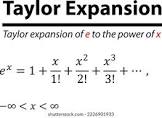
Taylor expansions are a fundamental method for approximating functions locally. In this chapter, we introduce practical methods for computing these expansions and illustrate their use.
The purpose of this chapter is to introduce several important classes of first and second-order ordinary differential equations (ODEs) and to develop the principal methods used to solve them.
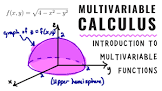
Functions of several variables are covered in this chapter. In this context, the concepts and techniques for computing limits, continuity, partial derivatives, and differentiability are presented. The notions of the gradient, divergence, and curl are also introduced.
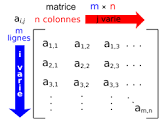
This chapter introduces the concepts of matrices, determinants, eigenvalues, eigenvectors, and systems of linear equations. By the end of this chapter, students will be able to perform matrix operations, calculate determinants , and solve systems of linear equations using the inverse matrix method and Cramers rule.
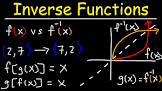
In this chapter, we introduce the concept of inverse functions and examine their main properties. We then study inverse trigonometric functions, followed by hyperbolic and inverse hyperbolic functions, with particular emphasis on their defi nitions and fundamental properties.
[1] W. Keith Nicholson, Linear Algebra with Applications, Version 2026-A-D, Vretta-Lyryx. [2] R. Makshud, Integral Calculus, 3D Gemetry and vector Booster with Problems and Solutions, Mc Graw-Hill, 2017.
[3] J. Stewart, Calculus, Concepts and Context, Brooks/cole Publishing company, USA, 1998. [4] G. Williams, Linear Algebra with Applications, sixth edition, Jones & Bartleh Learn- ing, 2007. [5] R. Wrede, M.R. Spiegel, Schums outline of Advanced Calculus, Third Edition, Mc Graw Hill. 151