Optique géométrique et physique
Section outline
-
University: Djilali Bounaama Khemis Miliana
Faculty: Matter Sciences and computer Science
Department: Physics
Domain: Matter Sciences
Branche: Physics
Level: L2_Physics
Module: Geometrical and Optical Physics.
Semester: 01 (15 weeks).
Coefficient: 04
Credit : 02
Semester hourly volume: 45h00.
Weekly hourly volume: 03h00 min (01h50 min lessons and 1h30 min tutorial)
Lecturer: Dr. ELBAA Mohamed.
specialty: Materials Physics
Diploma: Doctor in Materials Physics
Grade: MCB
Contact: m.elbaa@univ-dbkm.dz.
Assessment method: The evaluation is carried out through a Continuous assessment and a Final Exam (Continuous assessment: 33% and Final exam: 67%). To pass the module, the general average must be greater than or equal to 10 out of 20.
-

Optics in physics is essential in understanding how humans visualize the world. Studying the behavior of light allowed humans to construct and use optical devices, such as telescopes, microscopes, and cameras. These devices opened more opportunities to learn about other fields of study. Optics also paved the way for producing groundbreaking inventions (e.g., lasers and holography), some of which are used in visual communication and medical techniques. The discovery of fiber optics also played a crucial role on faster communication and transmission of information.
-
Geometrical and physical optics requires a strong foundation in basic mathematical concepts and a grasp of the principles of light propagation. Here are the key prerequisites:
Mathematical Concepts:
Ø Trigonometry: A solid understanding of trigonometric functions, identities, and their applications is crucial.
Ø Algebra: Proficiency in algebraic manipulation and equation solving is essential.
Ø Geometry: Knowledge of basic geometric shapes, properties, and theorems is necessary.
Physics Concepts:
Ø Reflection and Refraction: Understanding the laws of reflection and refraction, as well as the properties of mirrors and lenses, is fundamental.
Ø Ray Diagrams: Ability to draw accurate ray diagrams to visualize the path of light through optical
systems.
-
I. Chapter 1: Geometrical Optics
1.1- Principles and laws of geometrical optics
1.2- Notions of refringence
1.3- Snell-Descartes laws, Fermat's principle and Huygens' construction
1.4- Spherical mirrors and plane mirrors: position formula and image construction
1.5- Plane and spherical diopter: conjugation formula, magnification, notions of stigmatism and image construction
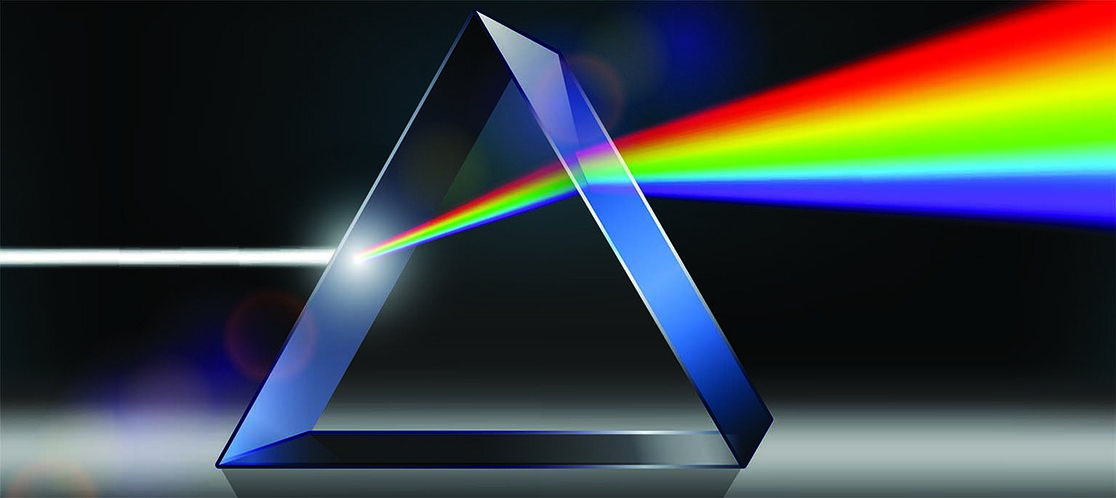
1.6- Prism: formulas, deviation and dispersion
1.7- Thin lenses: position formulas and image construction.
II. Chapter 2: Wave Optics
2.1- Generalities
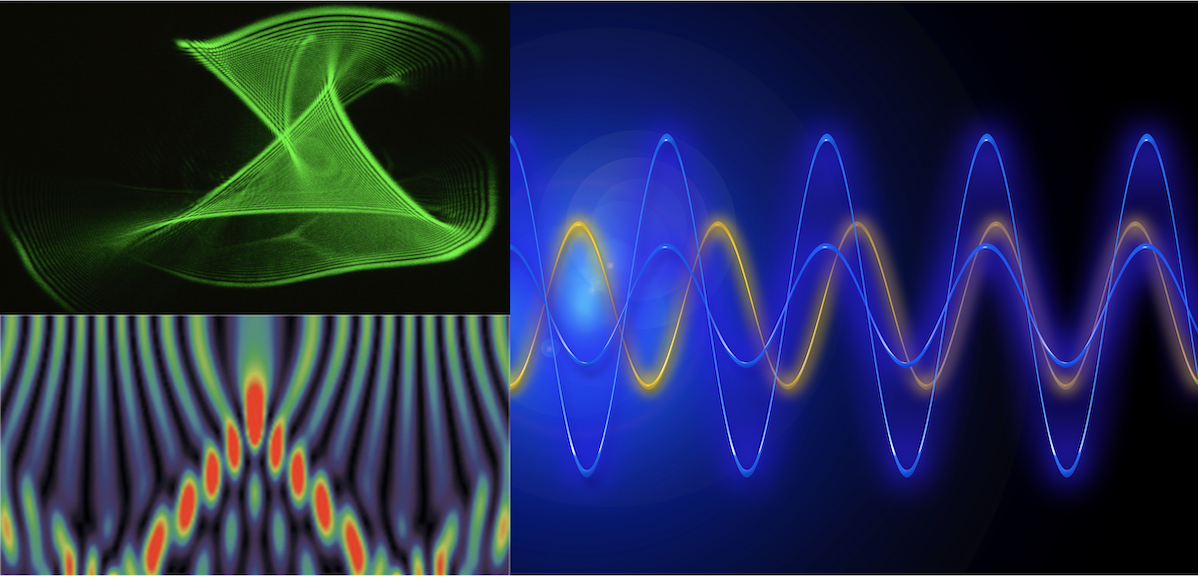
2.2- Principle of superposition of two monochromatic waves of the same frequency
2.3- Interference conditions: Notion of coherence
2.4- Interference of two coherent waves
2.5- Multiple wave interference: Michelson and Perot-Fabry interferometers
2.6- Interference in polychromatic light
III. Chapter 3: Diffraction and its Applications
3.1- Fresnel diffraction and Fraunhoffer diffraction
3.2- Diffraction by a rectangular aperture and diffraction by a circular aperture
IV. Chapter 4: Polarization
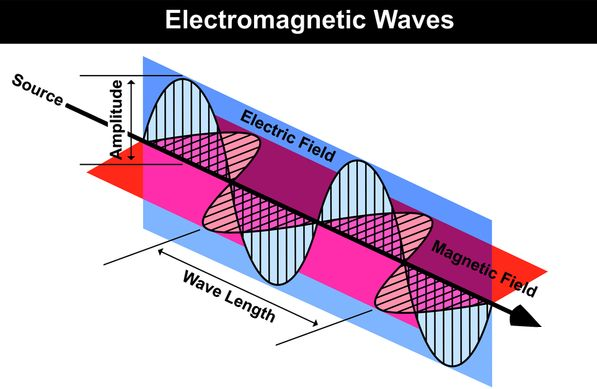
4.1- Transversality of waves
4.2- Structure of a linearly polarized wave
4.3- Reflection and refraction by transparent isotropic bodies.
V. Bibliography.