Echangeurs de Chaleurs
Section outline
-
Heat exchangers are essential thermal devices that enable the transfer of thermal energy between two or more fluids at different temperatures, without direct mixing between them. They play a fundamental role in many industrial and technological sectors, including power generation, HVAC systems, the chemical and petrochemical industries, water desalination, aeronautics, and electronic cooling systems.
The operating principle of heat exchangers is based on the fundamental mechanisms of heat transfer, namely conduction, convection, and, in some cases, radiation. The performance of these devices depends on several parameters, such as the nature of the working fluids, their thermophysical properties, flow regimes, geometric configuration, and operating conditions. Optimal design aims to maximize the heat transfer rate while minimizing pressure losses and energy costs.
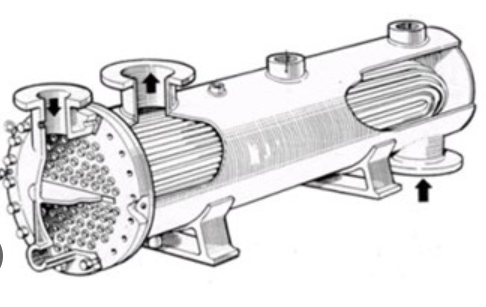
A wide variety of heat exchangers exists, classified according to their geometry (tubular, plate, finned, spiral), their flow arrangement (co-current, counter-current, cross-flow), or their field of application. Among these configurations, counter-current heat exchangers are often preferred due to their high thermal efficiency. Therefore, the selection of a suitable heat exchanger strongly depends on the thermal, mechanical, and economic requirements of the system under consideration.
With the growing demand for energy efficiency and sustainable development, current research focuses on improving the thermal performance of heat exchangers through the use of innovative geometries, advanced materials, and novel working fluids such as nanofluids. These advancements contribute to reducing overall energy consumption and enhancing the reliability of modern thermal systems.