اللغة الأجنبية TD
Section outline
-

"This academic year is a new opportunity to gain knowledge, develop skills, and build a successful academic path."
-
Welcome to the Foreign Language (English) module, specifically designed for Clinical Psychology students in their sixth semester. This course serves as a vital bridge between linguistic proficiency and psychological expertise. Throughout this semester, students will engage with a comprehensive curriculum that covers the evolution of clinical psychology, the semiology of psychological disorders, and various diagnostic techniques.
The module is structured to empower students with the ability to navigate specialized English texts, focusing on critical areas such as personality and behavioral disorders, as well as a diverse range of psychotherapeutic approaches—from psychoanalytical to cognitive-behavioral therapies. Additionally, we will address contemporary social challenges, including drug addiction and its impact on individuals and society. By the end of this course, students will not only master specialized terminology but also develop essential skills in translation and academic summarizing, paving the way for a successful career in the global field of psychology.

-
-
Field
Details
Institution
Djilali Bounaama University - Khemis Miliana
Faculty
Faculty of Social and Human Sciences
Department
Department of Psychology and Educational Sciences
Level
3rd Year Bachelor (L3)
Specialty
Clinical Psychology
Academic Semester
Semester 6 (S6)
Module Title
Foreign Language (English)
Unit Type
Transversal Unit
Lesson Type
(TD)
Credit Value
01
Coefficient
01
Weekly Hourly Load
1.5 Hours
Semester Hourly Load
22.5 Hours (approx. 15 weeks)
Assessment Method
Continuous Assessment
Instructor Email
f.louazani@univ-dbkm.dz
Time & Location
[Insert Day]
-
The primary goal of this course is to bridge the gap between psychological theory and linguistic proficiency in English. Upon successful completion of this module, students will be able to:
-
Identify various psychological disorders and their nosography in English terminology.
-
Describe the evolution of clinical psychology and the fundamental concepts of psychopathology.
-
Recognize different psychotherapeutic models (e.g., Psychoanalytical, CBT, and Humanistic).
-
Apply specialized English vocabulary to describe diagnostic techniques and behavioral disorders.
-
Use English linguistic skills to discuss the risks of drug addiction and its impact on the individual and society.
-
Analyze specialized English texts in the field of clinical psychology to extract key information.
-
Differentiate between various personality disorders and semiology patterns based on English clinical literature.
-
Translate complex psychological content from English to Arabic while maintaining scientific accuracy.
-
Summarize academic articles and clinical reports in English (Academic Abstract Writing).
-
Evaluate the effectiveness of different therapies within a global English-speaking psychological context.
-
-
To successfully engage with this module, students should possess a foundational level of English language skills (Reading and Comprehension). Additionally, a prior understanding of Psychopathology and familiarity with basic psychological terminology are essential to follow the specialized clinical content of this course.

-
-
Part 1: Fundamentals of Clinical Psychology
-
The Development of Clinical Psychology: A historical and conceptual overview.
-
Psychopathology: Defining mental health and abnormal behavior.
-
Nosography in Psychological Disorders: Classification and categorization.
-
Semiology in Psychology: Identifying signs and symptoms of mental illness.
Part 2: Understanding Psychological Disorders
-
Personality Disorders: Exploring various personality types and their dysfunction.
-
Behavioral Disorders: Analysis of maladaptive behavioral patterns.
-
Language Disorders: Psychological perspectives on communication impairments.
-
Diagnostic Techniques: Tools and methods for clinical assessment.
Part 3: Therapeutic Approaches (The Psychotherapies)
-
Introduction to Psychotherapies: General principles of psychological treatment.
-
Psychoanalytical Therapies: Understanding the unconscious and classical techniques.
-
Humanistic Therapies: Person-centered and experiential approaches.
-
Cognitive-Behavioral Therapies (CBT): Changing thoughts and behavior patterns.
-
Systemic Therapies: Family dynamics and relational contexts.
Part 4: Psychology and Contemporary Social Issues
-
Drugs and Society: The psychological and social dimensions of substance use.
-
Drug Addiction: Clinical understanding of dependency and its consequences.
-
-
Welcome to the Foreign Language (English) module, specifically tailored for Third-Year Clinical Psychology students during their sixth semester. In an increasingly globalized scientific community, proficiency in English is no longer just a linguistic skill, but a fundamental tool for accessing the latest international research, diagnostic manuals, and therapeutic innovations.
This course is strategically designed to bridge the gap between your psychological expertise and English language proficiency. Over the next 15 weeks, we will explore the core pillars of Clinical Psychology through an English-speaking lens. We will begin by tracing the evolution of the field and understanding the nosography and semiology of psychological disorders. A significant portion of our curriculum is dedicated to the study of personality and behavioral disorders, as well as a comprehensive overview of modern psychotherapies—ranging from Psychoanalytical and Humanistic approaches to Cognitive-Behavioral (CBT) and Systemic therapies.
Furthermore, we will address critical contemporary issues, such as drug addiction and its complex relationship with society. Beyond the theoretical content, this module focuses on practical academic skills: you will develop the ability to analyze specialized texts, translate scientific concepts accurately, and summarize academic findings in English. Our goal is to empower you with the terminological and analytical tools necessary to excel in your future academic and professional career as a clinical psychologist."
-
Learning Objectives
By the end of this lecture, students will be able to:
-
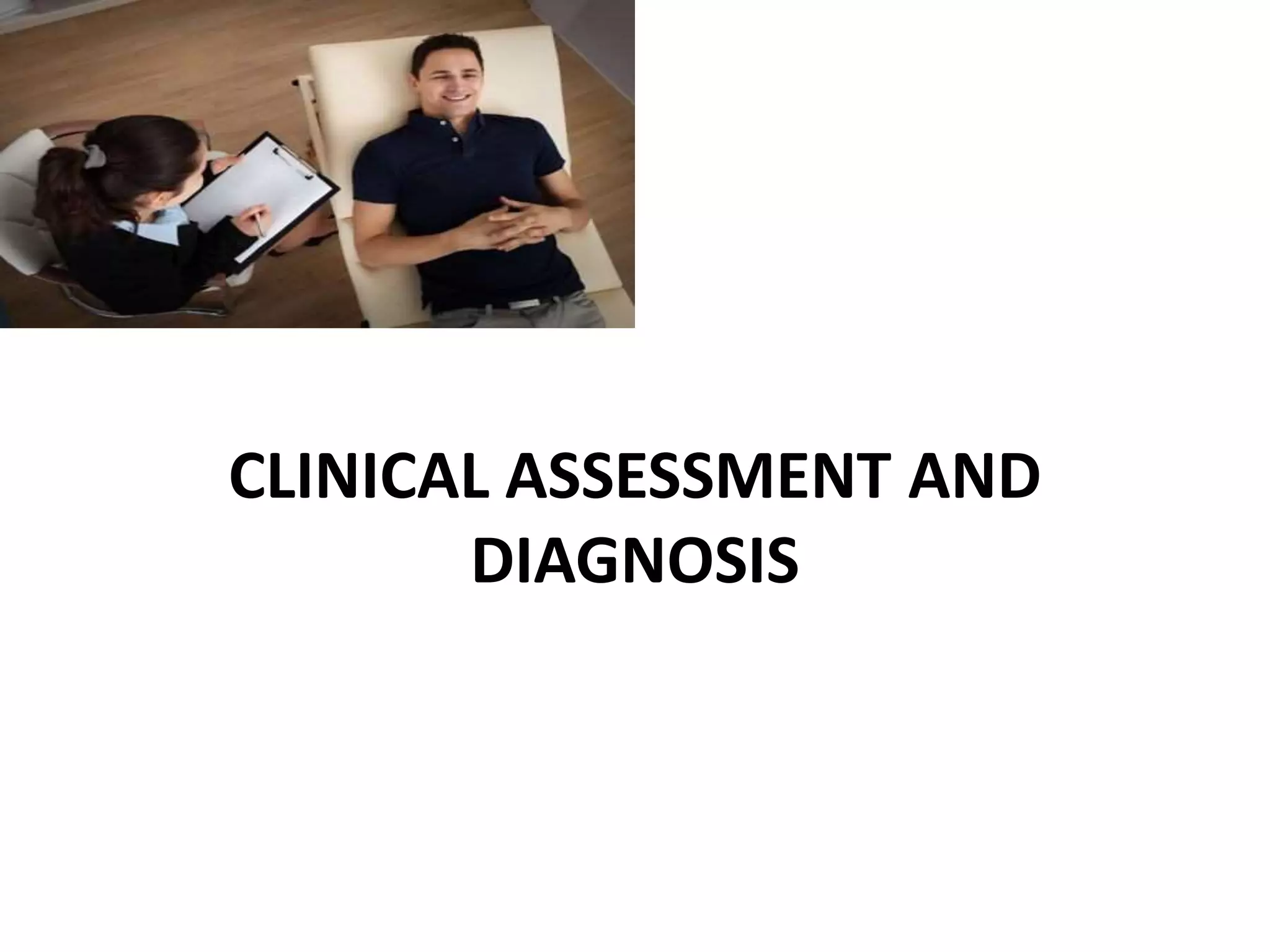
Define clinical psychology and explain its role in understanding and improving human behavior.
-
Outline the historical origins of clinical psychology, particularly the philosophical and social influences of the 18th and 19th centuries.
-
Identify the major pioneers of humanitarian reform in the treatment of mental illness and describe their contributions.
-
Explain the impact of scientific developments, including empiricism and the emergence of psychology as an independent science.
-
Describe the key milestones that led to the establishment of clinical psychology as a professional discipline in the late 19th century.
-
-
Learning Objectives
By the end of this lecture, students will be able to:
-
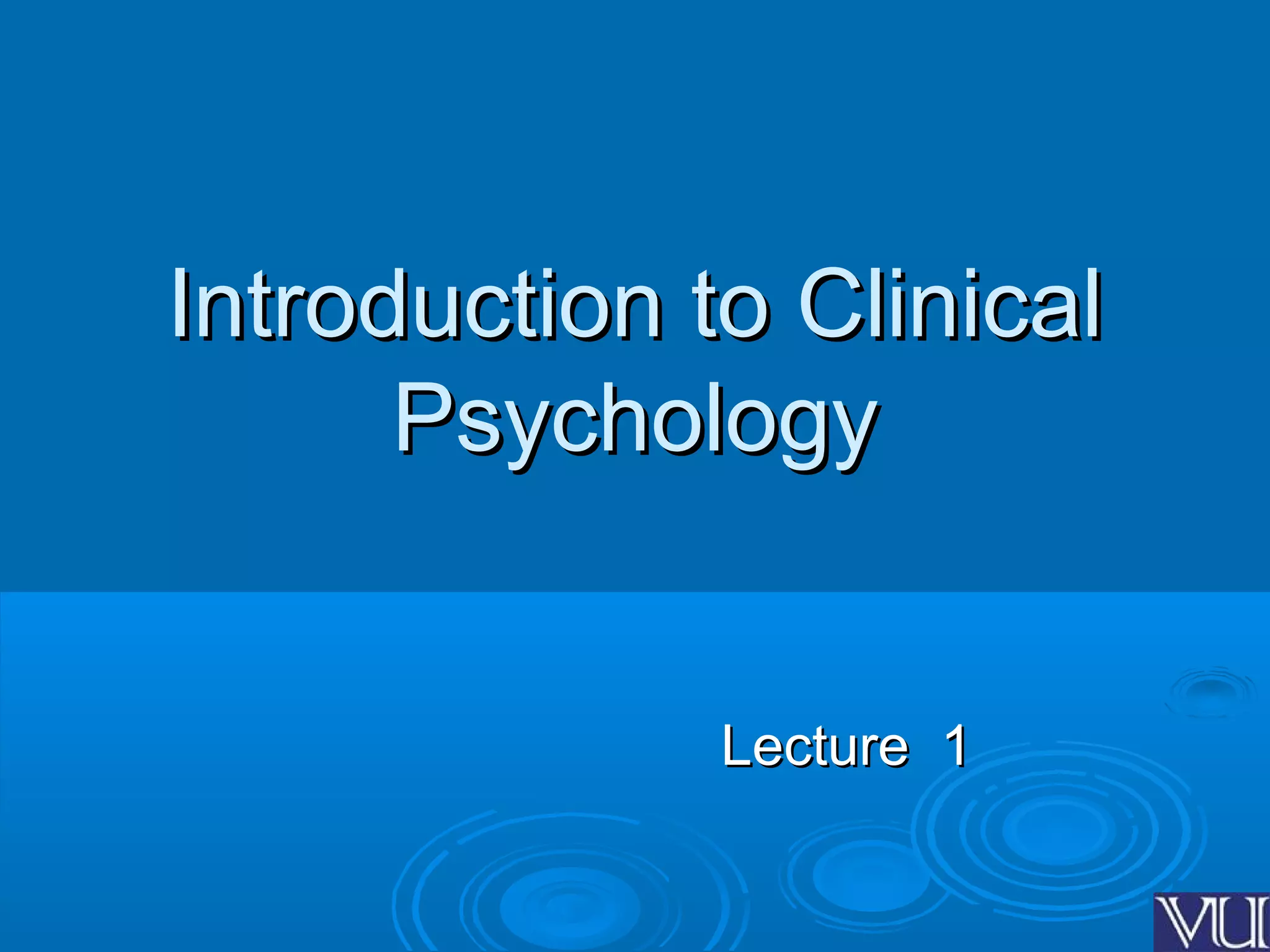
Define psychopathology and explain the main criteria used to identify abnormal behavior.
-
Describe the major classification systems of mental disorders, particularly the DSM-5-TR and the ICD.
-
Explain the principal psychological models used to interpret mental disorders, including biological, psychodynamic, behavioral, cognitive, and biopsychosocial perspectives.
-
Identify the main categories of psychological disorders such as anxiety disorders, mood disorders, schizophrenia spectrum disorders, and personality disorders.
-
Recognize the basic methods of clinical assessment and ethical principles used in psychological practice.
-
-
Learning Objectives
By the end of this lecture, students will be able to:
-
Define nosography (psychiatric nosology) and explain its importance in the classification and diagnosis of psychological disorders.
-
Describe the historical evolution of the classification of mental disorders, from ancient medical theories to modern psychiatric systems.
-
Differentiate between the major nosographic approaches, including categorical, dimensional, hybrid, and etiological models.
-
Identify the main modern classification systems, particularly DSM-5 and ICD-11, and explain their role in clinical practice.
-
Discuss the main challenges and limitations of psychiatric classification, including stigmatization and transcultural diagnostic issues.
-
-
Learning Objectives
By the end of this lecture, students will be able to:
-
Define semiology in psychology and explain its role in the study of signs and meaning in human communication and mental processes.
-
Differentiate between the European and American traditions of sign theory, particularly the contributions of Saussure and Peirce.
-
Explain the main theoretical models of the sign, including Saussure’s dyadic model and Peirce’s triadic model.
-
Describe the role of symbols and signs in psychoanalytic theory, with reference to Freud, Jung, and Lacan.
-
Discuss the clinical relevance of semiology in psychology, particularly its application to understanding psychopathology and symbolic dysfunction in disorders such as psychosis and schizophrenia.
-
-
Learning Objectives
By the end of this lecture, students will be able to:
-
Define personality and personality disorders and explain the characteristics that distinguish normal personality traits from maladaptive patterns.
-
Describe the main components of personality, particularly the roles of temperament and character in personality development.
-
Identify the three DSM-5 clusters of personality disorders and summarize the main features of each category.
-
Explain the biopsychosocial factors involved in the etiology of personality disorders, including genetic and environmental influences.
-
Recognize the main therapeutic approaches used in the treatment of personality disorders, with particular attention to psychotherapy and Dialectical Behavior Therapy (DBT).

-
Send a reading card for this article, which can be found at this link
-
-
Learning Objectives
By the end of this lecture, students will be able to:
1 define key terms related to Emotional and Behavioral Disorders (EBD), including disorder, internalizing behaviors, and externalizing behaviors.
2 explain the differences between internalizing and externalizing behaviors, providing clear descriptions of each category.
3 classify given clinical case examples into appropriate categories of EBD (e.g., anxiety, depression, conduct disorder).
4 analyze symptoms of selected disorders and distinguish between different diagnostic categories based on the ICD-10 classification system.
5 evaluate the effectiveness of different treatment approaches (CBT, behavioral therapy, medication) for specific emotional and behavioral disorders.

-
Learning Objectives
By the end of this lecture, students will be able to:
- Define language disorders and explain their main characteristics, including difficulties in receptive and expressive communication.
- Describe the different types of language disorders, including expressive, receptive, mixed receptive-expressive disorders, specific language impairment (SLI), and pragmatic language disorder.
- Identify the major causes and risk factors associated with language disorders, such as genetic, neurological, environmental, and hearing-related factors.
- Explain the clinical assessment and diagnostic procedures used by a Speech-Language Pathologist, including standardized tests, observation, case history, and hearing evaluation.
- Recognize the main treatment approaches for language disorders, including speech-language therapy, augmentative and alternative communication (AAC), and the role of family involvement in intervention.

-
Learning Objectives
By the end of this lecture, students will be able to:
- Define psychotherapy and explain its primary goals in improving psychological well-being.
- Describe the diversity of psychotherapeutic systems and discuss why no single approach is universally effective for all patients.
- Identify and summarize the main characteristics of major therapeutic approaches, including Psychoanalysis, behavior modification, client-centered therapy, and Gestalt therapy.
- Explain the concept of “insight” and analyze its role as a mechanism of psychological change across different therapeutic approaches.
- Evaluate the importance of selecting appropriate therapeutic modalities based on patient needs and clinical context.

-
Term
Definition in Context
Psychotherapy
An umbrella term for activities intended to improve a patient’s psychological well-being.
Well-being
The state of healthy and happy functioning in mind and spirit that therapy aims to improve.
Transference
A phenomenon where the patient shifts feelings about a significant person from their past onto the therapist.
Resistance
The instinctive opposition a patient shows toward making unconscious material conscious.
Behavior Modification
Treatment focusing on changing behaviors through a learning process rather than internal states.
Insight
An "aha" moment or personal paradigm shift that triggers psychological change.
Empathy
The capacity to accurately perceive and understand what another person feels and means.
Unconscious
The part of the psyche containing motivations or systems not currently in the person's awareness
-
Learning Objectives
By the end of this lecture, students will be able to:
- Define psychoanalytical therapies and explain their philosophical foundations, particularly the role of early childhood experiences and the unconscious mind as proposed by Sigmund Freud.
- Describe the structure of personality and explain the function of defence mechanisms in regulating the conflict between the id, ego, and superego.
- Identify and summarize the main psychoanalytic techniques, including free association, dream analysis, transference, and behavioral observation.
- Analyze the key focus areas of modern psychodynamic therapy, such as affect, avoidance, recurring patterns, past experiences, interpersonal relations, therapeutic relationship, and fantasy life.
- Evaluate the strengths and limitations of psychoanalytical therapies, including their effectiveness, duration, cost, and theoretical complexity.
-
English Term
Definition in Context
Psychoanalytical Therapies
Therapies based on reconstructing the client's past.
Subconscious Mind
The source of basic instincts and impulses.
Id & Superego
Components of personality that defence mechanisms balance.
Resistance
Deliberate or inadvertent attempts to avoid distressing thoughts.
Countertransference
Emotional reactions of the therapist toward the client.
Attachment Figures
Primary caregivers whose early influence affects present life.
Symptom Reduction
A primary goal of long-term psychoanalytic therapy.
In vivo
Analyzing interpersonal themes as they happen in the session
-
Learning Objectives
By the end of this lecture, students will be able to:- Define humanistic therapies and explain their philosophical foundations, including the concepts of free will, self-actualization, and the “Third Force” in psychology.
- Describe the core assumptions of the humanistic approach, including holism, phenomenology, innate goodness, and the focus on the here and now.
- Identify and explain the three core conditions of therapeutic change proposed by Carl Rogers: empathy, unconditional positive regard, and congruence (authenticity).
- Differentiate between the major humanistic therapeutic modalities, including client-centered therapy, Gestalt therapy, existential therapy, logotherapy, and narrative therapy.
- Analyze the clinical effectiveness of humanistic therapies in treating psychological disorders such as depression, anxiety, and trauma, and compare their outcomes with other approaches like cognitive behavioral therapy (CBT).

-
Learning Objectives
By the end of this lecture, students will be able to:
- Define Cognitive Behavioral Therapy (CBT) and describe its key characteristics and historical development, including the contributions of Aaron T. Beck.
- Explain the Cognitive Model and apply it to illustrate the relationship between thoughts, emotions, and behaviors in real-life or clinical situations.
- Differentiate between the three layers of cognition (automatic thoughts, intermediate beliefs, and core beliefs) and analyze their role in psychological disorders.
- Use core CBT techniques (e.g., Socratic questioning, thought records, behavioral activation) to evaluate dysfunctional thoughts and propose appropriate interventions.
- Assess the effectiveness of CBT based on empirical evidence and construct a basic cognitive-behavioral case formulation for a given clinical example.

-
Learning Objectives
By the end of this lecture, students will be able to:
- Define the concepts of drug and medicine and explain the differences between medico-legal and pharmacological definitions within clinical psychology.
- Explain the main pharmacological classifications of psychoactive substances (stimulants, depressants, hallucinogens, and deliriants) and describe their effects on the central nervous system.
- Apply the biopsychosocial model to substance use disorders by identifying biological, psychological, and social factors in clinical case examples.
- Analyze the social and clinical impacts of drug use, particularly the role of family dynamics and environmental factors in the development and maintenance of addiction.
- Evaluate major clinical interventions and prevention strategies (e.g., Cognitive-Behavioral Therapy, Motivational Interviewing, Harm Reduction) and propose appropriate approaches for specific clinical situations.

-
Learning Objectives
By the end of this lecture, students will be able to:
- Define drug addiction (Substance Use Disorder) as a chronic, relapsing brain disease and explain its core clinical and neurobiological characteristics.
- Explain the main psychological motives for drug use (e.g., seeking pleasure, coping, performance enhancement, and social influence) and their relevance in clinical assessment.
- Describe how drugs affect the brain by explaining key concepts such as neurotransmission, the reward system, dopamine release, and the development of tolerance.
- Analyze the major risk factors for addiction (biological, environmental, and developmental) and explain why vulnerability differs across individuals.
- Evaluate the relationship between addiction and mental health (comorbidity) and propose appropriate treatment approaches, including detoxification and evidence-based behavioral therapies (e.g., CBT, Motivational Interviewing, Family Therapy).
-
-
مفتوح: السبت، 25 أبريل 2026، 12:00 AMمغلق: الخميس، 28 مايو 2026، 12:00 AM
You have what it takes to succeed
Students who obtain a mark of 10 or above will be considered as having successfully passed the course.
Furthermore, assessment in the Foreign Language (Continuous Assessment / Directed Work) module will be ongoing. Students are therefore expected to actively engage with and complete all learning activities provided after each lecture, as consistent participation constitutes an essential component of their overall evaluation.
-