
Electronique puissance avancées
Section outline
-
-
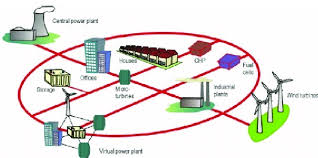
Lessons with Supervised work on advanced power electronics involves hands-on experience and guidance in designing, developing, and integrating sophisticated electronic systems. This field encompasses a wide range of applications, including distributed energy systems, electric vehicles, and industrial automation. Under supervision, students or engineers can explore topics such as modular power electronics, advanced semiconductor technologies, and AI-driven control systems. They learn to analyze and optimize power converter designs, develop feedback control systems, and integrate power electronics with other systems like electric machines and renewable energy sources. Supervised projects often involve collaboration with industry partners, providing real-world challenges and solutions that enhance understanding and skills in advanced power electronics.
-
-
Chapter 1 introduces fundamental methods for simulating and modeling power semiconductors in advanced power electronics. It covers numerical and analytical approaches to represent the dynamic behavior of devices like IGBTs, MOSFETs, and diodes, accounting for switching phenomena, losses, and thermal constraints. The goal is to equip engineers with essential tools for validating converter designs prior to real-world prototyping.
-
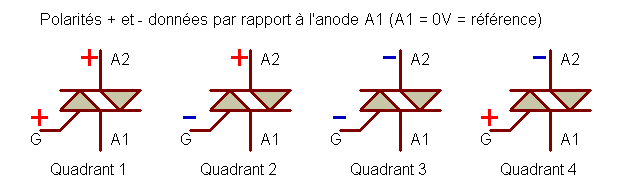
Chapter 2 examines the switching mechanisms essential to static converters in advanced power electronics. It details the turn-on and turn-off processes of power devices like MOSFETs, IGBTs, and thyristors, including hard and soft switching techniques to minimize losses and electromagnetic interference. The chapter also covers modulation strategies such as PWM, analyzing their impact on converter efficiency and output waveforms in applications like choppers and inverters.
-
Chapter 3 outlines design methodologies for static converters operating under natural switching conditions in advanced power electronics. It focuses on resonant and quasi-resonant topologies where switching occurs at zero-voltage or zero-current points, reducing losses and improving efficiency compared to hard-switching PWM converters. Key topics include component sizing for inductors, capacitors, and switches, along with analysis of load characteristics and stability criteria for applications like DC-DC resonant converters.
-
Chapter 4 presents design methodologies for static converters using forced switching techniques in advanced power electronics. Unlike natural switching, it emphasizes hard-switching PWM strategies where devices like MOSFETs and IGBTs operate under controlled gate signals regardless of voltage/current conditions, enabling higher power density but introducing switching losses. The chapter covers topology selection (buck, boost, full-bridge), component stress analysis, snubber design for voltage clamping, and control loops for stable regulation in high-frequency applications.
-
Chapter 4 explores multilevel inverters as advanced power electronic converters in the context of static converter design. These topologies generate stepped AC waveforms from multiple DC voltage levels, reducing harmonic distortion, dv/dt stress, and the need for transformers compared to traditional two-level inverters. The chapter covers major types including diode-clamped, flying capacitor, and cascaded H-bridge configurations, along with modulation techniques like PWM and selective harmonic elimination for high-power applications such as motor drives and renewable energy systems.
-
Chapter 6 addresses power quality issues arising from static converters in advanced power electronics systems. It analyzes key parameters such as harmonic distortion (THD), power factor, ripple content, and electromagnetic interference generated by switching operations in converters like rectifiers, inverters, and choppers. The chapter presents mitigation techniques including passive/active filters, PWM optimization, and standards compliance (IEEE 519) to ensure grid compatibility and reliable energy delivery.