
LESSON ONE: The Respiratory System in Speech-Language Pathology
Learning Outcomes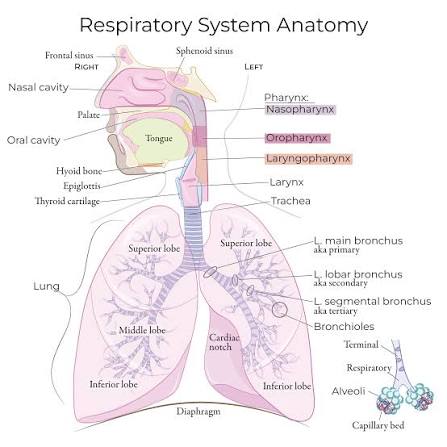
By the end of this lecture, students will be able to:
- Identify the key anatomical structures involved in respiration relevant to speech, including lungs, diaphragm, trachea, bronchi, and alveoli.
- Explain the physiological mechanisms of inhalation and exhalation, highlighting differences between quiet breathing and speech breathing (e.g., 50/50 vs. 10/90 ratios).
- Describe the role of the bony skeletal framework (vertebral column, rib cage, pectoral and pelvic girdles) in supporting respiration for speech.
- Analyze the impact of respiratory disorders (e.g., COPD, asthma, neuromuscular disease) on voice quality, loudness, and phrase length.
- Apply respiratory knowledge in clinical assessment and intervention, including observation, functional tests (maximum phonation time, syllable repetition), and pulmonary function measurements.
Click LessonOne.pdf link to view the file.