-
-
-
Opened: Wednesday, 1 October 2025, 12:00 AMDue: Monday, 20 October 2025, 12:00 AM

Course: Speech and Language Pathology / Communication Disorders
Quiz Type: Diagnostic (Not graded or low stakes)
Purpose: To assess whether students possess the foundational knowledge needed for the course.
-
-
-
-
-
-
SEQUENCE TWO: Introduction to the anatomy, physiology, and pathology of the phonatory and auditory systems.
-
Learning Outcomes
By the end of this lecture, students will be able to:
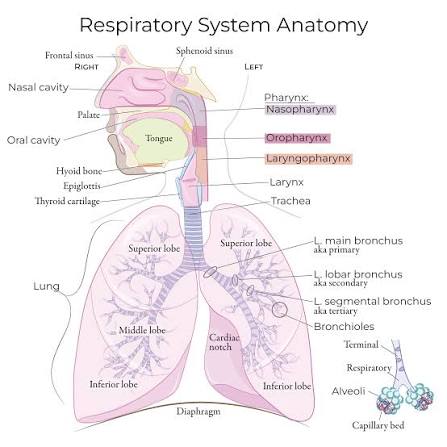
- Identify the key anatomical structures involved in respiration relevant to speech, including lungs, diaphragm, trachea, bronchi, and alveoli.
- Explain the physiological mechanisms of inhalation and exhalation, highlighting differences between quiet breathing and speech breathing (e.g., 50/50 vs. 10/90 ratios).
- Describe the role of the bony skeletal framework (vertebral column, rib cage, pectoral and pelvic girdles) in supporting respiration for speech.
- Analyze the impact of respiratory disorders (e.g., COPD, asthma, neuromuscular disease) on voice quality, loudness, and phrase length.
- Apply respiratory knowledge in clinical assessment and intervention, including observation, functional tests (maximum phonation time, syllable repetition), and pulmonary function measurements.
-
Learning Objectives
By the end of this chapter, students should be able to:
- Identify the anatomical location of the larynx and hyoid bone.
- Describe the skeletal framework of the larynx, including unpaired and paired cartilages.
- Explain the function and attachment of intrinsic and extrinsic laryngeal membranes.
- Identify and classify laryngeal muscles and their role in phonation.
- Describe the structure and divisions of the internal cavity of the larynx.
- Relate laryngeal anatomy to phonatory function, vocal fold motion, and speech production.
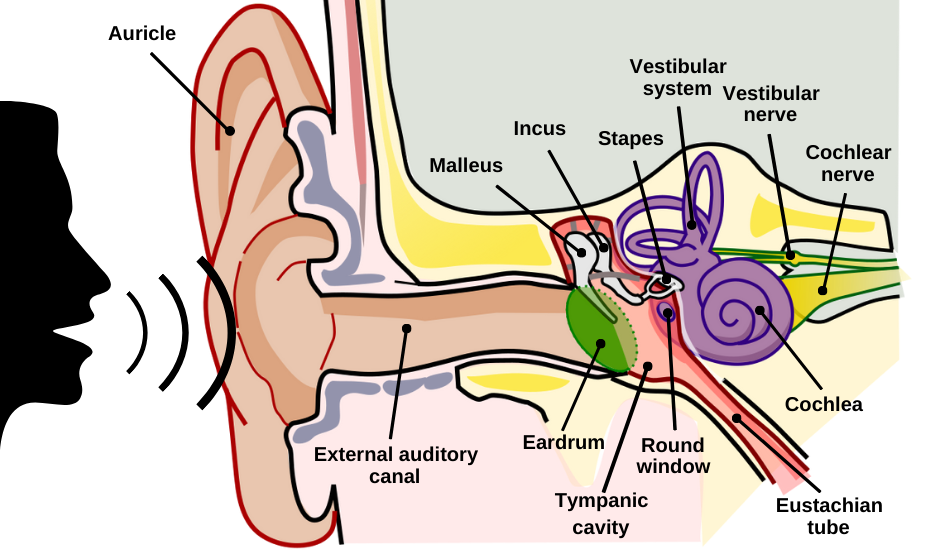
- Identify the key auditory structures involved in hearing and their role in speech perception.
- Correlate structural and functional abnormalities with common voice and hearing disorders.
- Apply clinical reasoning to case scenarios involving phonatory and auditory dysfunction.
-
Lesson Outline
- Introduction
- The Articulatory System
- Skeletal Framework of Articulation
- Muscular Framework of Articulation
- The Major Articulators
- Active and Passive Articulators
- Coordination of Articulation During Speech
- Clinical Applications in Speech-Language Pathology
- Essential Vocabulary
- Practical Activities
- Summary
- Review Questions
-
-
-
-
-
Lesson Outline
- Introduction
- Why Use Case Studies?
- Case Study 1: Language Delay
- Case Study 2: Autism Spectrum Disorder
- Case Study 3: Stuttering
- Case Study 4: Adolescent Social Communication
- Case Study 5: Child with Hearing Loss
- Integrating Developmental Theories into Clinical Practice
- Essential Vocabulary
- Practical Activities
- Summary
- Review Questions
-
-
-
-
Opened: Tuesday, 30 December 2025, 8:48 PMClosed: Sunday, 25 January 2026, 11:59 PM
-
-
GENERAL OBJECTIVES
Section outline
-
General Objectives
General Objectives
- Develop foundational knowledge of statistical concepts in a foreign language, including both descriptive and inferential statistics.
- Enhance understanding of key statistical measures, such as mean, median, and standard deviation, and their applications in research.
- Build basic competencies in research methodology, including measurement principles, test construction, and adaptation in the social sciences.
- Acquire fundamental knowledge of human anatomy and physiology, particularly the phonatory and auditory systems, and their related pathologies.
- Understand the structure and function of the nervous system, including both central and peripheral components.
- Develop a solid grounding in psychological theories and schools of thought, with emphasis on their historical and conceptual foundations.
- Gain insight into developmental psychology, focusing on child and adolescent development.
- Apply theoretical knowledge to practical situations through the analysis of case studies.
- Strengthen academic and professional communication skills in a foreign language across different subject areas.
- Promote integrative learning through comprehensive reviews of training modules.