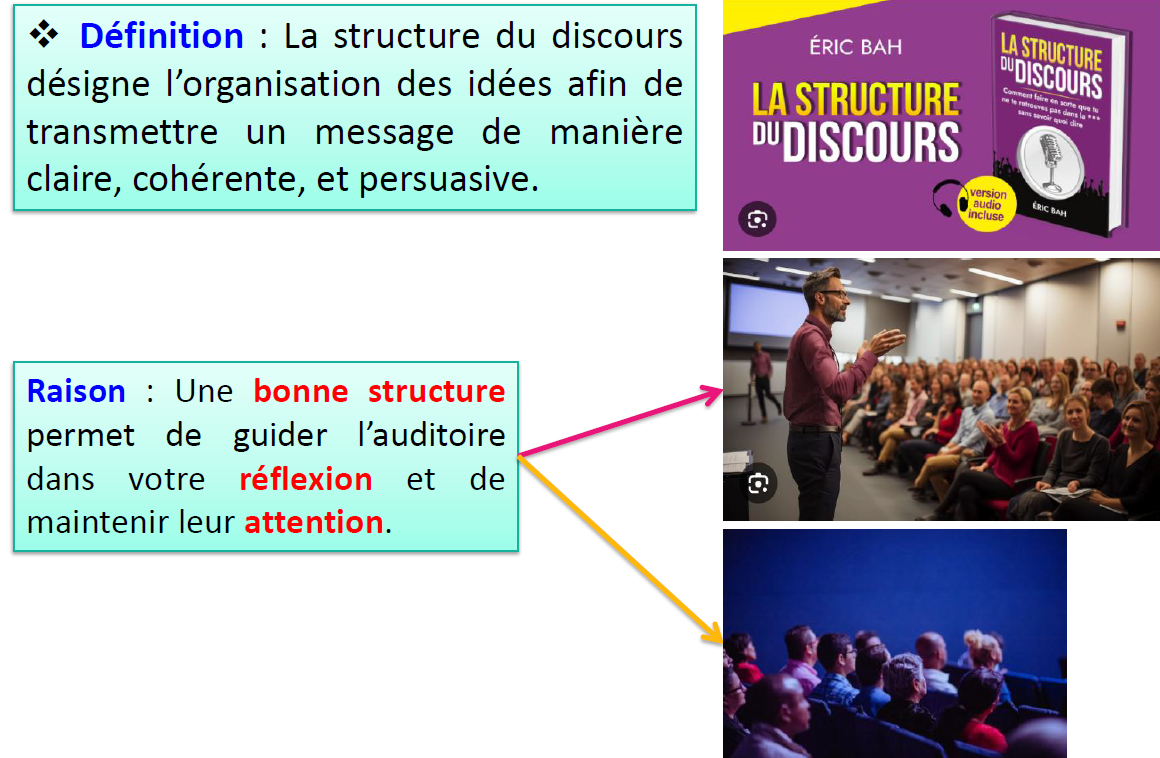
Communication and expression technics 2
Section outline
-
-
-
-

Course: Techniques of Communication and Expression (in English)
Course Instructor: Dr. GADOURI Hamid
Credits: 4
Coefficient: 2
Teaching Unit: Discovery
Semester: 2
Specialization: Common Core
Cycle: First Year Bachelor’s Degree
Lecture Hall: 06
-
-
-
-
-
-
-

This course, entitled “Communication and Expression Techniques (in French)”, is primarily intended for first-year Bachelor’s degree students (common core SNV), as well as practitioners specializing in TEC. It provides a synthesis of essential theoretical and practical knowledge in TEC, with a focus on applications in various situations.
This course complies with the academic programs of higher education institutions and is designed to equip future communicators with the necessary skills to address challenges related to TEC. The objective is to develop a deep understanding of TEC processes. The course is structured around four key chapters, namely:
- Scientific Terminology
- Study and Text Comprehension
- Written and Oral Expression Techniques (reports, summaries, use of modern communication tools)
- Expression and Communication in a Group. Study of Selected Texts (observe, analyze, summarize, written expression)
Tutorials (Practical Work):
Provision of exercises related to the most important language aspects.Assessment Method:
Continuous assessment and a semester examination.References (Books, lecture notes, websites, etc.):
Scientific articles.
-
-
-
-
-
-
-
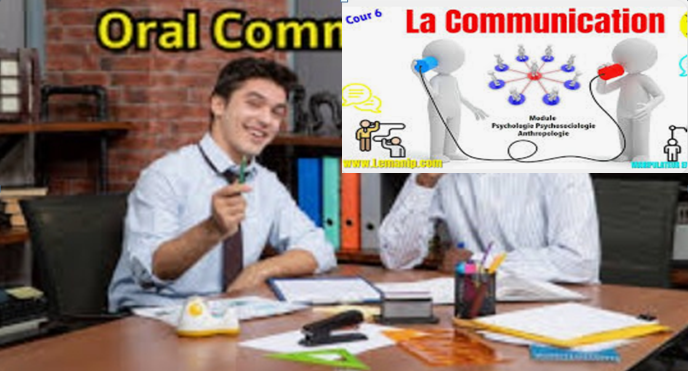
Mastering communication and expression techniques in French is a fundamental asset in many professional and academic fields. Communicating effectively, whether in written or oral form, is an essential skill that enables the clear, precise, and persuasive transmission of ideas. Within the framework of this course, we will address the various aspects of communication, ranging from writing and text structuring techniques to public speaking and the art of persuasion.
-
-
-
-
-
-
-
Text study and comprehension are fundamental skills in many academic and professional fields. They not only enable the assimilation of information but also help develop a critical mindset toward the ideas and arguments presented. This chapter aims to provide methodological tools and practical techniques for analyzing different types of texts, whether narrative, argumentative, or informative.
We will explore the essential steps for gaining a deep understanding of a text, from exploratory reading to critical interpretation. Particular attention will be given to the organization of ideas, the identification of arguments, and the highlighting of stylistic nuances. This analytical work is complemented by practical exercises and concrete examples to reinforce learning.
-
-
-
-
-
-
-
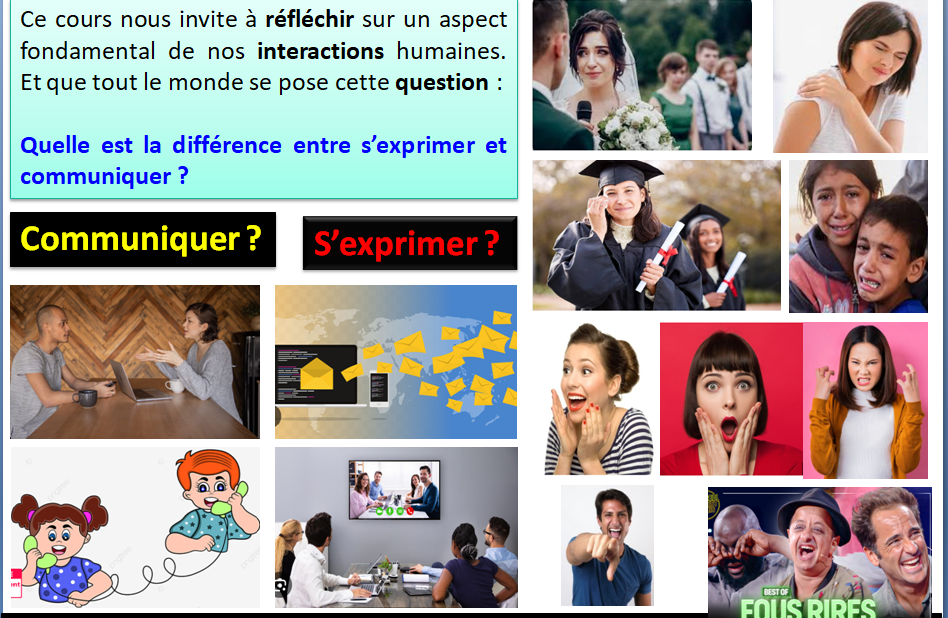
It is essential to clearly understand the distinction between expression and communication. Expression refers to the way an idea is formulated, while communication focuses on the process of exchanging information. This distinction is crucial, as good expression does not necessarily guarantee successful communication if the message is not properly received or understood.
-
-
-
-
-
-
-
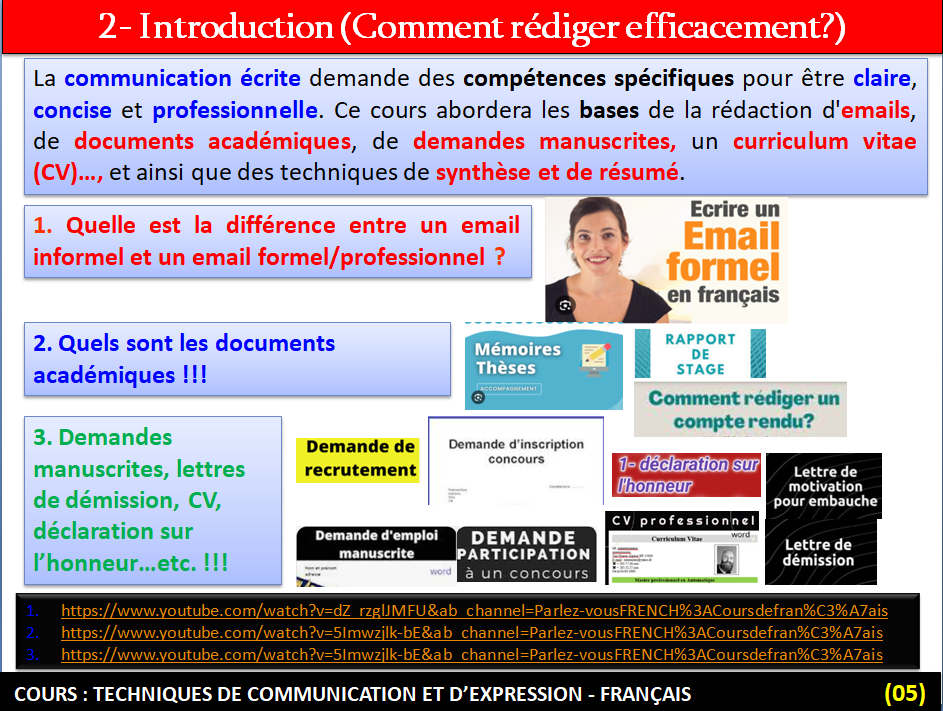
Written communication plays a central role in many fields, whether it involves writing a report, an email, or an academic article. It demands precision, clarity, and structure in order to effectively convey a message while capturing the reader's attention. This chapter aims to provide practical tools and methods to improve your writing skills, respecting the norms and expectations specific to each context.
We will explore the essential elements of good writing, such as the organization of ideas, word choice, and mastery of style. Special attention will be given to structuring documents, the correct use of language verification tools, and techniques for revising and optimizing your texts.
Mastering these techniques will enable you to produce professional, impactful writing suited to its objectives, while strengthening your credibility and effectiveness in your written interactions.
-
-
-