
-

This chapter explains the structural components of plays and the diverse types of theatrical speech. To illustrate these dramatic concepts, the text features a comprehensive literary analysis of Henrik Ibsen’s A Doll’s House. This case study examines how themes of gender inequality and identity are portrayed through realistic stage directions and character development. Altogether, these materials serve as a pedagogical guide for students to identify and interpret the technical elements of creative literature.
-
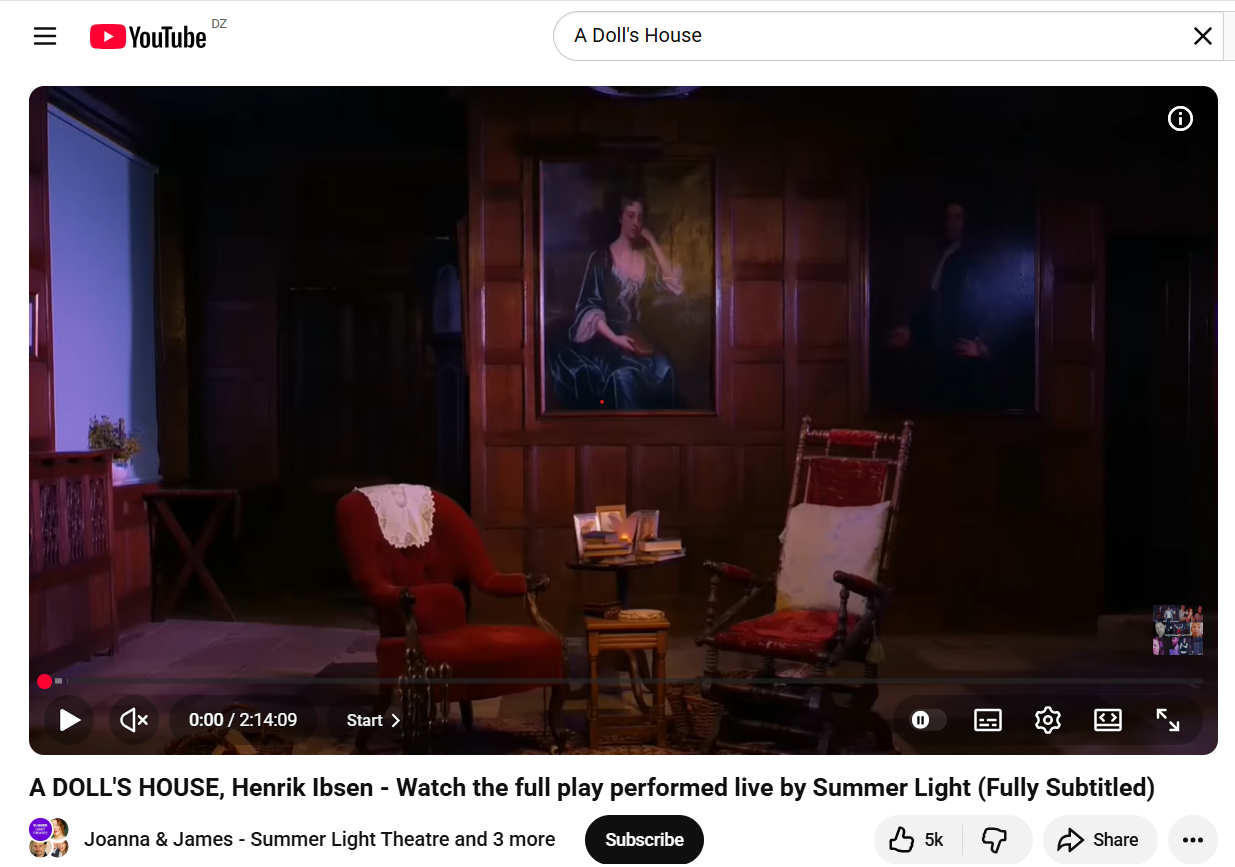
A Doll's House is a three-act play written by Henrik Ibsen and first published in 1879. It is considered one of the most influential works of modern drama.
The play centers on Nora Helmer, a seemingly happy wife and mother who gradually realizes that her marriage is based on control and appearances rather than equality and mutual respect. As the story unfolds, Nora confronts difficult truths about her husband, herself, and the limited role society expects women to play.
You can watch the plau through the following link:
-

This virtual meeting is intended to review and discuss the knowledge acquired in Chapter Two. Students are encouraged to participate actively by asking questions, sharing their understanding, and engaging in discussions to reinforce the key concepts covered in the chapter.
-

This forum is dedicated to questions related to the second chapter. Students are asked to post all their questions, requests for clarification, or comments related to the content of this lecture here to facilitate discussion and academic support.
-

Writing and Performing a Short Play
Working in groups of 4 to 6 students, write and perform an original short play. Your performance must demonstrate at least three different types of dramatic speech (e.g., dialogue, monologue, soliloquy, or aside). Be creative while ensuring that each type of dramatic speech is used appropriately and effectively.
Chapter Two: Drama
Section outline
-

The learning objectives of Chapter Two (Drama)
At the end of this chapter, students will be able:
To define basic dramatic divisions;
To identify types of dramatic speech; and
To conduct a literary analytical study.