
TP Electronique de puissance avancée
Section outline
-
-
Practical work in advanced power electronics involves hands-on experience with the design, analysis, and implementation of sophisticated power electronic systems. This field is crucial for enhancing the efficiency and reliability of power conversion in various applications, including renewable energy systems, electric vehicles, and industrial automation. This module includes some key areas citing:
Power converter design: Students and researchers engage in designing and testing advanced power converters such as DC-DC (e.g., Cuk, SEPIC, Zeta) and DC-AC converters, which are essential for integrating renewable energy sources into the grid.
Control systems: Practical work includes developing control systems for motor drives, solar array peak power tracking, and other applications that require precise control over power flow.
Simulation and modeling: Utilizing software tools like MATLAB and Simulink to simulate and analyze power electronic systems before physical implementation.
Indutrial collaboration: Many programs involve collaboration with industry partners to solve real-world problems, providing students with practical experience in applying theoretical knowledge to industrial challenges.
Overall, practical work in advanced power electronics prepares individuals to tackle complex power engineering problems and contribute to the development of more efficient and sustainable energy systems.
-
-
Teacher’s presentationName: KARA MOSTEFA KHELILFirst name: ChérifaE-mail: karasolar@yahoo.fr, k.karamostapha@univ-dbkm.dz, karamostefa_cherifa@univ-blida.dz, Additional information on the teaching unitcoefficient: 1Credit: 2VHS: 22h30 H (PW: 01h30)Evaluation methods: Assesment 100%final exam Support modalities:- I remain reachable in person or by email to answer all questions from my students and any other people interested in my course.
-
-
-
Content of the subject
PW1: New converter structures;
PW2: Improvement of the power factor;
PW3: Elimination of harmonics;
PW4: Static reactive power compensators.
-
-
-
Practical work in MATLAB Simulink involves designing, simulating, and analyzing dynamic systems using a graphical block diagram environment. This hands-on approach allows users to model complex systems, such as electrical circuits in addition to control systems, without the need for extensive coding. Simulink integrates seamlessly with MATLAB, enabling users to incorporate algorithms and analyze simulation results. Practical exercises often include building models from scratch, using various blocks like sources, transfer functions, and scopes, and running simulations to observe system behavior. This practical experience is invaluable for understanding system dynamics and optimizing performance in fields like power electronics, robotics, and automotive engineering.

-
-
-
Practical work with DC-DC and AC-DC converters involves hands-on experience with designing, building, and testing these essential power electronic circuits. DC-DC converters are used to transform a direct current (DC) voltage from one level to another, which is crucial in applications like portable electronics and renewable energy systems. They operate using switching techniques, allowing for efficient step-up or step-down voltage conversion. Common types include buck, boost, and buck-boost converters, each with its own application depending on the required output voltage relative to the input.
In contrast, AC-DC converters, also known as rectifiers, convert alternating current (AC) to a stable DC output. This is typically achieved through rectification of AC power from the grid or other AC sources. Practical work with AC-DC converters involves understanding different rectification methods, such as half-wave and full-wave rectification, and implementing filters to smooth the output voltage. Both types of converters are vital in modern electronics for ensuring efficient and reliable power supply to various devices and systems. Practical experiments often involve simulating these converters using tools like MATLAB Simulink to analyze their performance under different conditions.
-
-
-
Improving the power factor is a crucial aspect of electrical engineering, aimed at enhancing the efficiency of electrical systems by reducing reactive power consumption. The power factor (PF) is a measure of how effectively electrical power is utilized in a system, with higher values indicating better efficiency. In addition, Improving the power factor reduces energy losses, enhances system stability, and can lead to lower electricity bills. The choice of method depends on factors such as cost, efficiency, and the nature of the load.
-
-
-
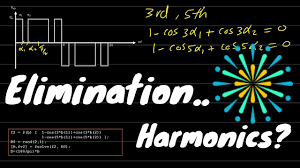
Practical work in the elimination of harmonics involves implementing various techniques to reduce unwanted harmonic frequencies in electrical systems. Harmonics can lead to power quality issues, such as increased energy losses and equipment overheating. To mitigate these effects, passive filters and active filters are commonly used. Passive filters attenuate specific frequencies, while active filters dynamically generate reverse currents to cancel harmonics. Another approach is selective harmonic elimination (SHE), often used in multilevel inverters, which involves adjusting switching patterns to suppress specific harmonics. These methods improve power quality, enhance system efficiency, and extend the lifespan of electrical equipment.
-
-
-
Static reactive power compensators, such as Static Var Compensators (SVCs) and Static Synchronous Compensators (STATCOMs), are crucial devices in modern power systems. SVCs are fast-acting devices that provide reactive power to maintain voltage stability and improve power factor by using thyristor-controlled reactors and capacitors. They are widely used in high-voltage transmission networks and industrial applications to regulate voltage and stabilize the system7. STATCOMs, on the other hand, utilize power electronics to act as sources or sinks of reactive power, offering dynamic support during faults and contingencies. Both types enhance system stability, reduce power losses, and improve overall grid efficiency.
-