-
References
American Speech-Language-Hearing Association. (1993). Definitions of communication disorders and variations. ASHA.
American Speech-Language-Hearing Association. (n.d.). Communication disorders. ASHA.
American Speech-Language-Hearing Association. (n.d.). Spoken language disorders. ASHA Practice Portal.
Individuals with Disabilities Education Act, 20 U.S.C. § 1400 et seq. (2004).
Owens, R. E., Jr. (2016). Language development: An introduction (9th ed.). Pearson.
Paul, R., Norbury, C. F., & Gosse, C. (2018). Language disorders from infancy through adolescence: Listening, speaking, reading, writing, and communicating (5th ed.). Elsevier.
Shipley, K. G., & McAfee, J. G. (2021). Assessment in speech-language pathology: A resource manual (6th ed.). Plural Publishing.
Yule, G. (2022). The study of language (8th ed.). Cambridge University Press.
-
-
-
-
-
References
Altmann, G. T. M. (1997). The ascent of Babel: An exploration of language, mind, and
understanding. Oxford University Press.
Anderson, J. R. (2020). Cognitive psychology and its implications (9th ed.). Worth Publishers.
Atkinson, R. L., Atkinson, R. C., Smith, E. E., Bem, D. J., & Nolen-Hoeksema, S. (2003).
Hilgard's introduction to psychology (14th ed.). Wadsworth.
Ball, M. J., Perkins, M. R., Müller, N., & Howard, S. (Eds.). (2024). The handbook of clinical
linguistics (2nd ed.). Wiley-Blackwell.
Berk, L. E. (2022). Child development (10th ed.). Pearson.
Berk, L. E. (2023). Development through the lifespan (8th ed.). Pearson.
Ciccarelli, S. K., & White, J. N. (2023). Psychology (7th ed.). Pearson.
Eysenck, M. W., & Keane, M. T. (2020). Cognitive psychology: A student's handbook (8th
ed.). Psychology Press.
Field, J. (2003). Psycholinguistics: A resource book for students. Routledge.
Goldstein, E. B. (2022). Cognitive psychology: Connecting mind, research, and everyday
experience (6th ed.). Cengage Learning.
Harley, T. A. (2022). The psychology of language: From data to theory (5th ed.). Psychology
Press.
Levelt, W. J. M. (1989). Speaking: From intention to articulation. MIT Press.
Matlin, M. W. (2022). Cognition (10th ed.). Wiley.
Myers, D. G., & DeWall, C. N. (2023). Psychology (14th ed.). Worth Publishers.
Owens, R. E., Jr. (2024). Language development: An introduction (11th ed.). Pearson.
Papalia, D. E., & Martorell, G. (2021). Experience human development (15th ed.). McGrawHill.
Santrock, J. W. (2024). Life-span development (19th ed.). McGraw-Hill.
Shaffer, D. R., & Kipp, K. (2022). Developmental psychology: Childhood and adolescence
(10th ed.). Cengage Learning.
Shipley, K. G., & McAfee, J. G. (2021). Assessment in speech-language pathology: A
resource manual (6th ed.). Cengage Learning.
Sternberg, R. J., & Sternberg, K. (2024). Cognitive psychology (8th ed.). Cengage Learning.
Traxler, M. J. (2023). Introduction to psycholinguistics: Understanding language science (3rd
ed.). Wiley-Blackwell.
-
-
-
-
Course: English for Speech-Language Pathology
Level: Second Year
Mode: Online
Lesson: 1
Estimated student time: 45–60 minutesLearning Outcomes
By the end of this online lesson, students will be able to:
- identify the main parts of speech in English;
- distinguish nouns, verbs, adjectives, adverbs, pronouns, prepositions, conjunctions, and determiners;
- identify the subject, verb, and object in simple sentences;
- recognize basic English sentence patterns;
- identify subject–verb agreement errors;
- apply basic grammatical analysis to speech-language pathology examples.
-
Course: English for Speech-Language Pathology
Level: Second-Year Undergraduate
Mode: Online / Moodle
Estimated study time: 45–60 minutesLearning Outcomes
By the end of this lesson, students will be able to:
- Explain the functions of the present simple, present continuous, past simple, and past continuous.
- Form affirmative, negative, and interrogative sentences using these tenses.
- Distinguish between completed, habitual, ongoing, and temporary actions.
- Use appropriate verb tenses in speech-language pathology contexts.
- Identify and correct common tense errors.
- Select appropriate tenses when describing a client's history, current performance, and clinical assessment.
-
Lesson 3: Nouns, Pronouns, Articles and Determiners
Course: English for Speech-Language Pathology
Level: Second-Year Undergraduate
Mode: Online / Moodle
Estimated Duration: 45–60 minutes
Unit: Functional GrammarLearning Outcomes
By the end of this lesson, students will be able to:
- Define and identify nouns, pronouns, articles, and determiners.
- Distinguish between countable and uncountable nouns.
- Form and use singular and plural nouns correctly.
- Use a, an, and the appropriately.
- Use subject, object, and possessive pronouns correctly.
- Use common determiners such as some, any, many, much, few, little, this, that, these, and those.
- Avoid common noun and pronoun errors in English.
- Apply these grammatical structures in speech-language pathology contexts.
- Use clear noun and pronoun references in clinical writing.
-
Course: English for Speech-Language Pathology
Level: Second-Year Undergraduate
Mode: Online / Moodle
Estimated Duration: 45–60 minutes
Unit: Functional GrammarLearning Outcomes
By the end of this lesson, students will be able to:
- Define and identify prepositions, adjectives, and adverbs.
- Use common prepositions of place, time, and direction correctly.
- Distinguish between adjectives and adverbs.
- Form common adverbs from adjectives.
- Use adjectives to describe people, conditions, behaviors, and clinical findings.
- Use adverbs to describe actions and manner.
- Recognize common adjective + preposition combinations.
- Recognize common verb + preposition combinations.
- Use prepositions, adjectives, and adverbs accurately in clinical contexts.
Improve the clarity and precision of clinical descriptions.
-
-
Cambridge Dictionary. English Grammar Today: Sentences. Cambridge University Press.
Cambridge Dictionary. English Grammar Today: Clauses. Cambridge University Press.
Carter, R., & McCarthy, M. (2006). Cambridge Grammar of English: A Comprehensive Guide. Cambridge University Press.
Eastwood, J. (2022). Oxford Practice Grammar: Intermediate (4th ed.). Oxford University Press.
Murphy, R. (2019). English Grammar in Use (5th ed.). Cambridge University Press.
-
-
LESSON THREE:Subdivisions of Language
Section outline
-
Learning Objectives
By the end of this unit, students will be able to:
1. Define the five main components of language: phonology, morphology, syntax, semantics, and pragmatics.
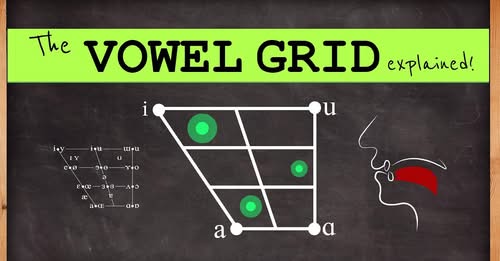
2. Explain the rules and functions of phonology, including the role of phonemes and the organization of speech sounds.
3. Describe the structure of words in morphology, identifying morphemes and their meanings.
4. Analyze sentence structure and word order according to syntactic rules, recognizing correct and incorrect constructions.
5. Interpret meaning in language through semantics, including word meanings, relationships, and figurative language.
6. Apply pragmatic principles by understanding how language varies across social contexts, listeners, and situations.
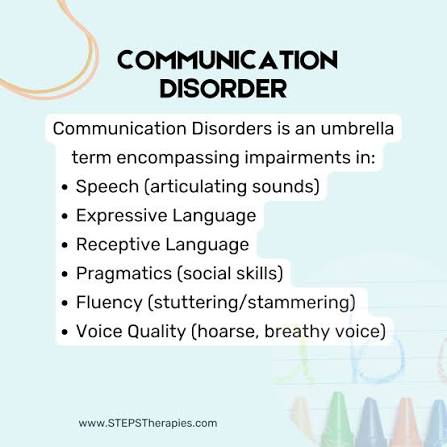
7. Recognize how each language component develops in typical learners and how impairments may manifest in communication disorders.