Bilingualism
Section outline
-
The course introduces students to the phenomenon of using
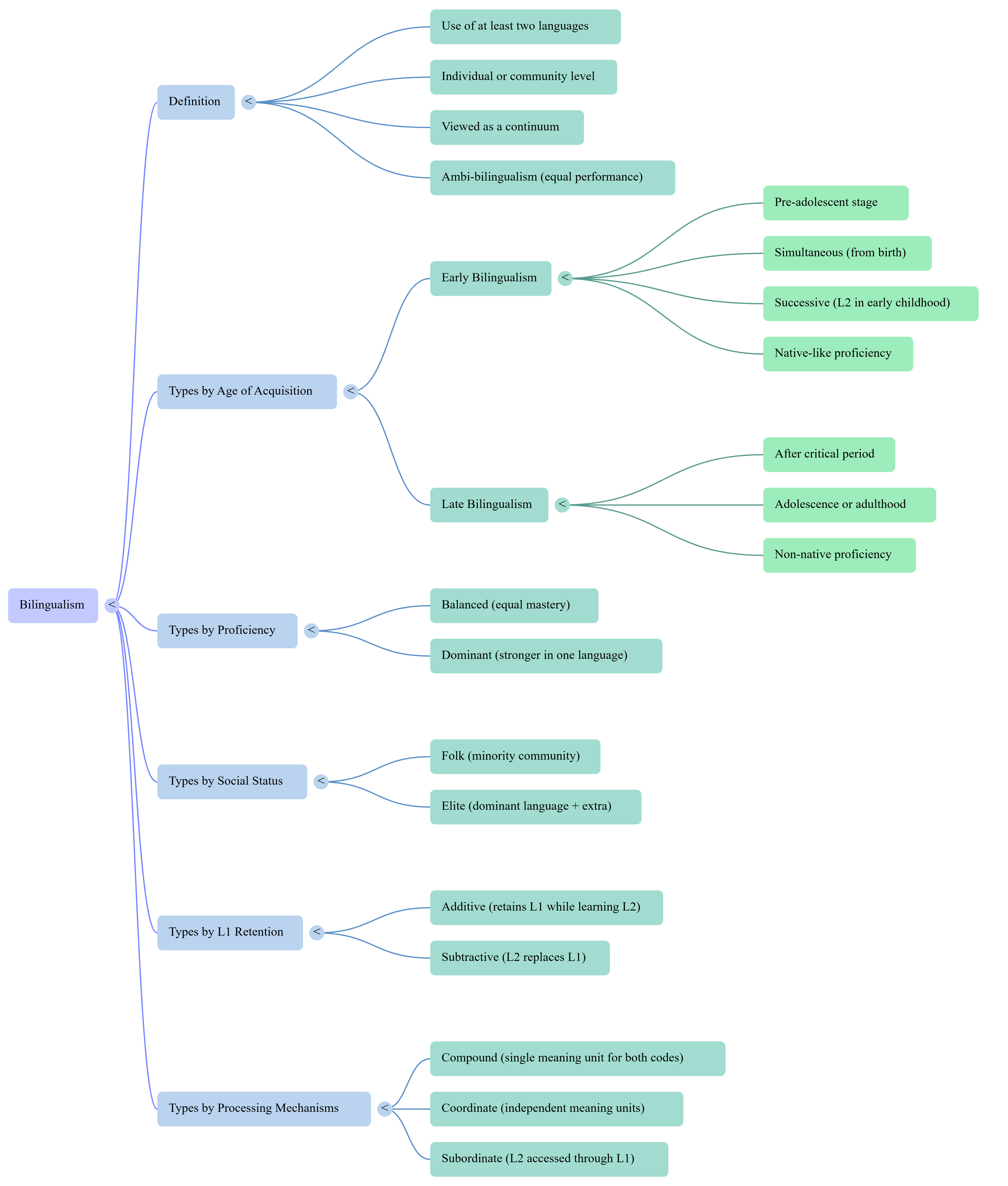
two languagesbyan individualora community. It presents maindefinitions and types of bilingualism(individual vs societal; balanced vs dominant; early vs late) . The course also encourages students to analyse bilingual practices in their own environment and to reflect critically on common beliefs and attitudes towards bilingual speakers.Objectives
At the end of the course, students will be able to:
-
Define
bilingualismand distinguish it from related notions such asdiglossiaand multilingualism. -
Help students identify
main types of bilingualism(individual vs societal; balanced vs dominant; early vs late; simultaneous vs sequential) and illustrate each with examples. -
Develop students’ ability to describe
bilingual repertoiresand patterns of language use across domains (family, school, administration, media, peer groups) in their own community. -
Train students to
analyse short case studies or profilesof bilingual speakers and classify them according to type and degree of bilingualism, with justified arguments.
-
-
The video highlights the
differencebetween serveraltypes of Bilingualism.-
 This forum is dedicated to the course of Bilingualism. Students might ask their questions, seeking clarification about the course content.
-
-
-