
Code Switching
Résumé de section
-
The course of
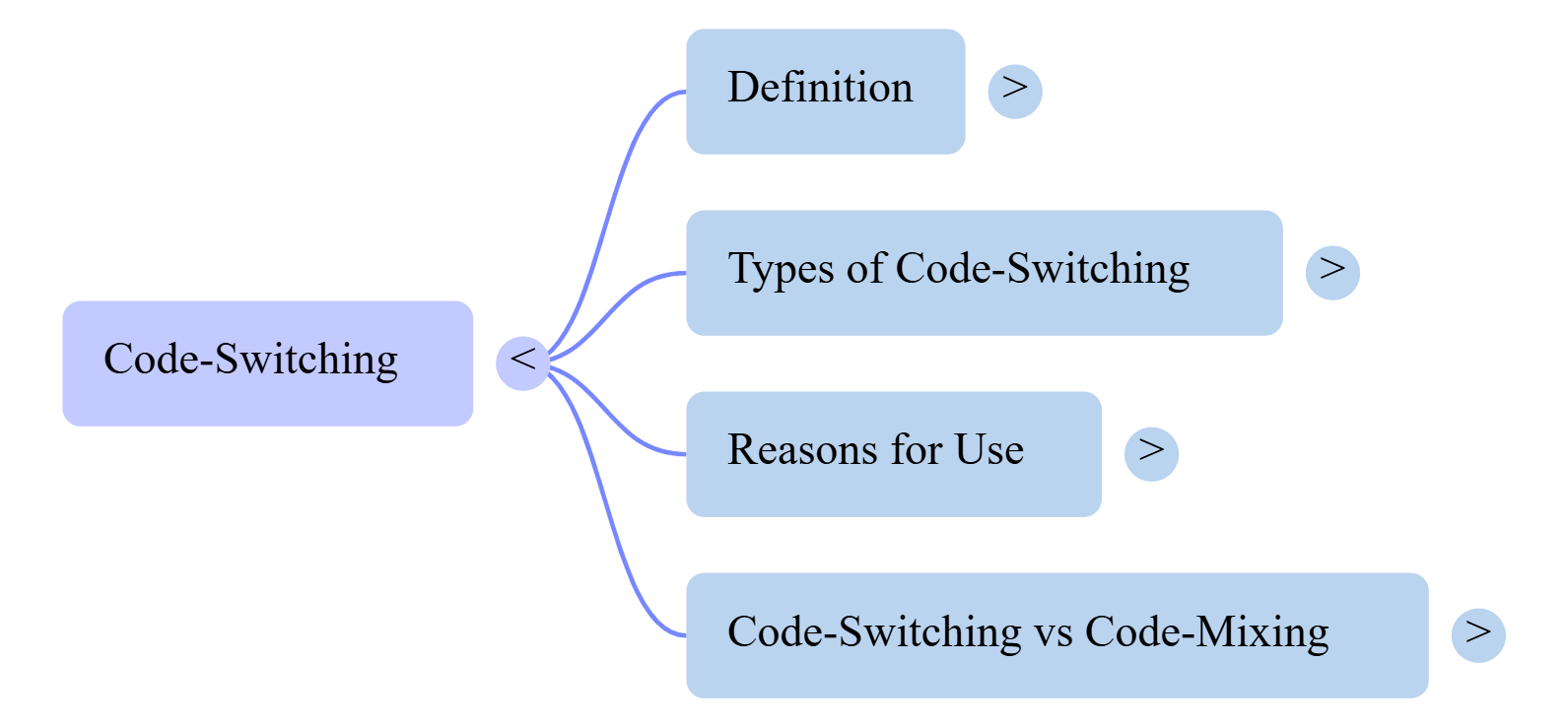
code switchingintroduces students to the phenomenon of alternating between two (or more) languages or varieties within the same interaction, utterance, or discourse. It clarifies howcode switchingdiffers fromcode mixing, outlines its main structuraltypes(inter‑sentential, intra‑sentential, tag switching), and explores thecommunicative and social functionsit fulfils in multilingual communities.Objectives
-
-
-

The present document is helpful for students to have an idea about code switching
-
-
-
-
The video expounds the concept of
Code-Switching and Code-Mixingand theirfunctionsof use. It also explains thedifferencebetween them throughexamples.-
The present forum is attributed to students in order to ask their questions about code-switching. -
-
-
-