Diglossia
Section outline
-
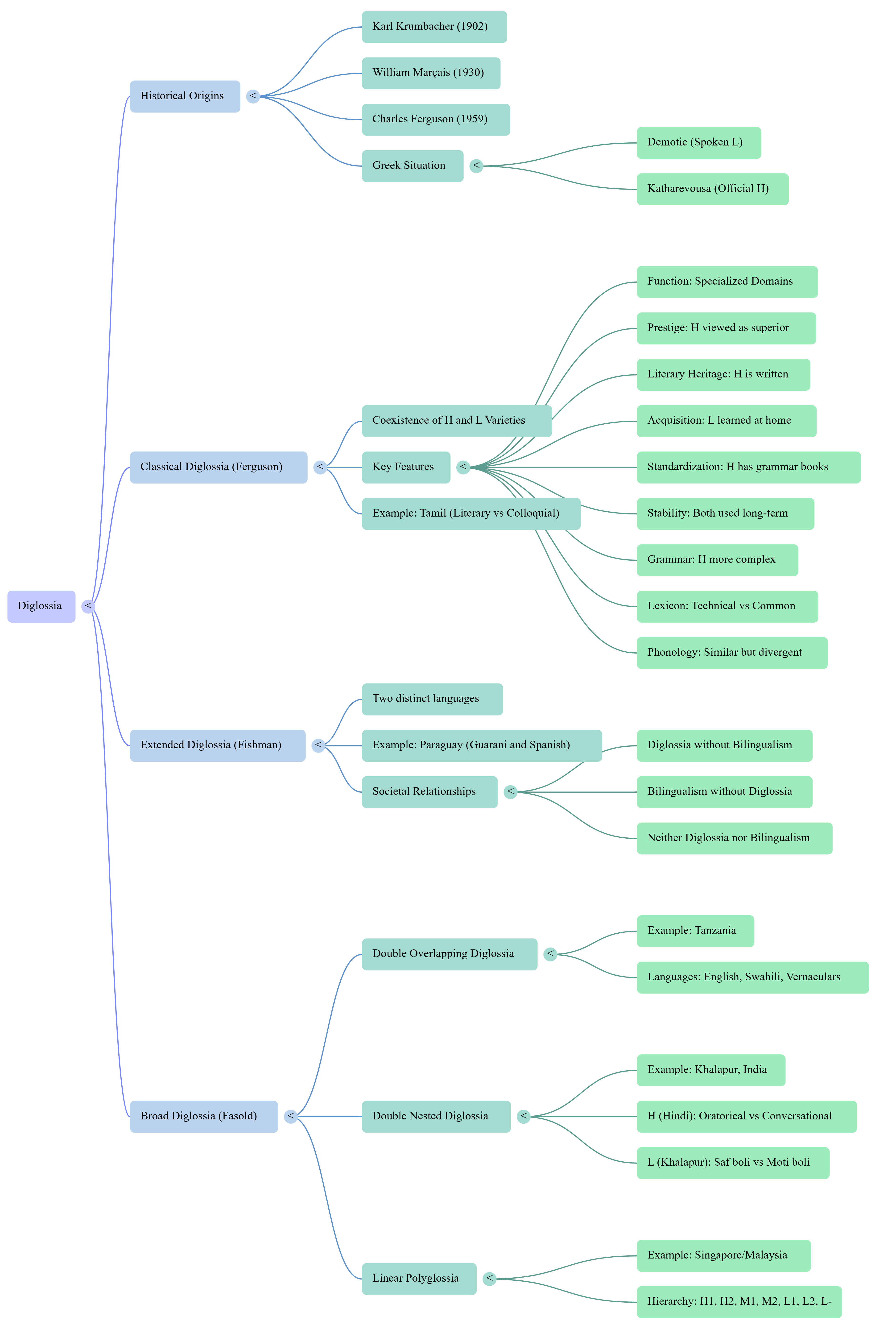
This lesson provides a brief overview of diglossia as a sociolinguistic notion, beginning with Ferguson's classical definition and highlighting the characteristics of H and L varieties through examples from Greek, Arabic, and Tamil. It then provides Fishman's extension to bilingual communities and Fasold's concept of broad diglossia.
Objectives of the course
-
Enabling students to define diglossia and identify High (H) and Low (L) varieties in a given speech community.
-
Helping students describe the functional distribution of H and L varieties across domains (education, religion, home, media, administration, etc.).
-
Developing students’ ability to analyse real examples from their own environment and recognise when and why speakers choose H or L.
-
Encouraging students to discuss the social and educational implications of diglossia, including issues of prestige, stigma, identity, and access to literacy/schooling.
-
Training students to use appropriate sociolinguistic terminology (diglossia, H/L variety, domain, prestige, standard, vernacular) in oral and written work.
-
Fostering critical reflection on language attitudes and language policy in diglossic societies, particularly in their own national/contextual setting.
-
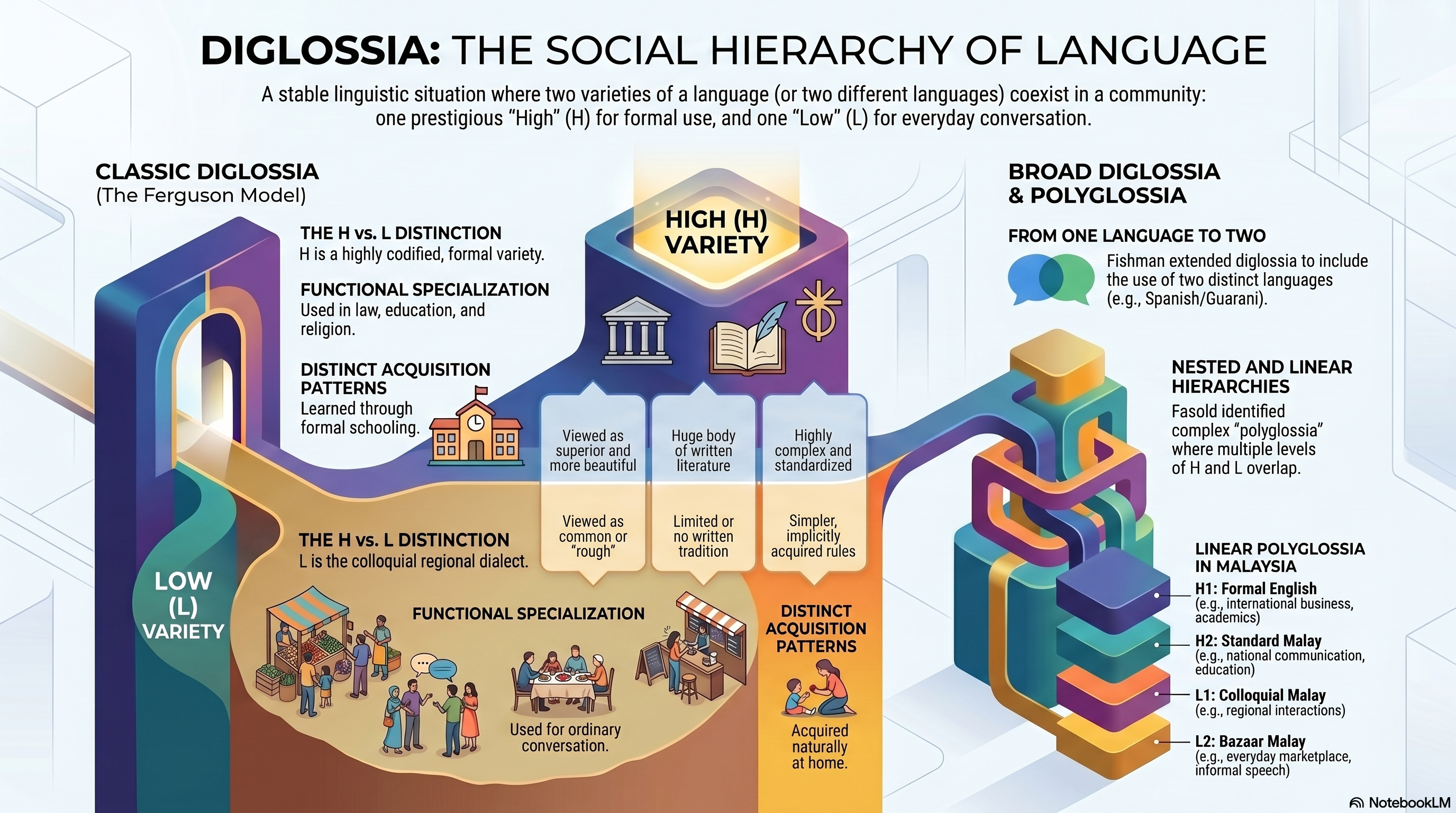

The present file contains information about Diglossia as a sociolinguistic phenomenon. It is crucial to be read by students.
-

Following Fishman's definition, how can you describe the Diglossic situation in Algeria?
-