- Tutorial Teacher (TD): charfia lilia
- Teacher: Madiha BENNADJI
- Tutorial Teacher (TD): Mohamed OUZAA
- Teacher: SORAYA SEDKAOUI

The Business Management course offers a practice-oriented overview of how organizations are effectively directed and coordinated through core managerial functions—planning, organizing, leading, and controlling—while ensuring the efficient integration of key functional areas such as operations, finance, marketing, and human resources. It emphasizes managerial competence, strategic thinking, and organizational performance, contributing to the development of capable managers who support institutional efficiency, adaptability, and sustainable value creation.
- Teacher: Hamid ABDALLAH EL HIRTSI
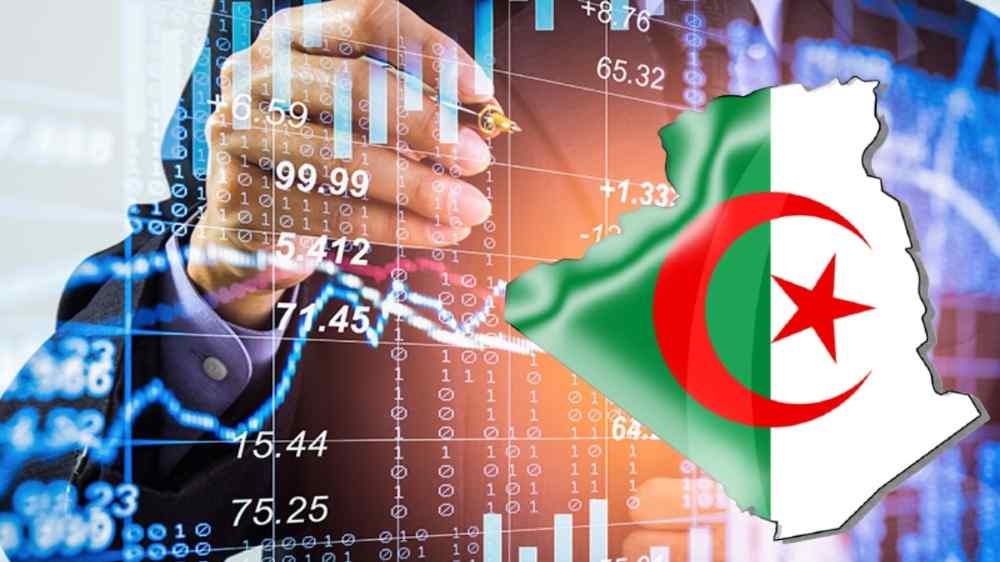
This course provides an analytical overview of the Algerian economy, tracing its historical evolution from the Ottoman period through French colonization and post-independence development to contemporary economic reforms. It examines the foundations of the national economic system, development planning strategies, the transition toward a market economy, and the impact of economic reforms and public investment. The course also explores Algeria’s integration into the global economy, including its relations with international organizations and OPEC, while assessing current challenges and future economic prospects.
- Teacher: Hamid ABDALLAH EL HIRTSI
Course Objectives:
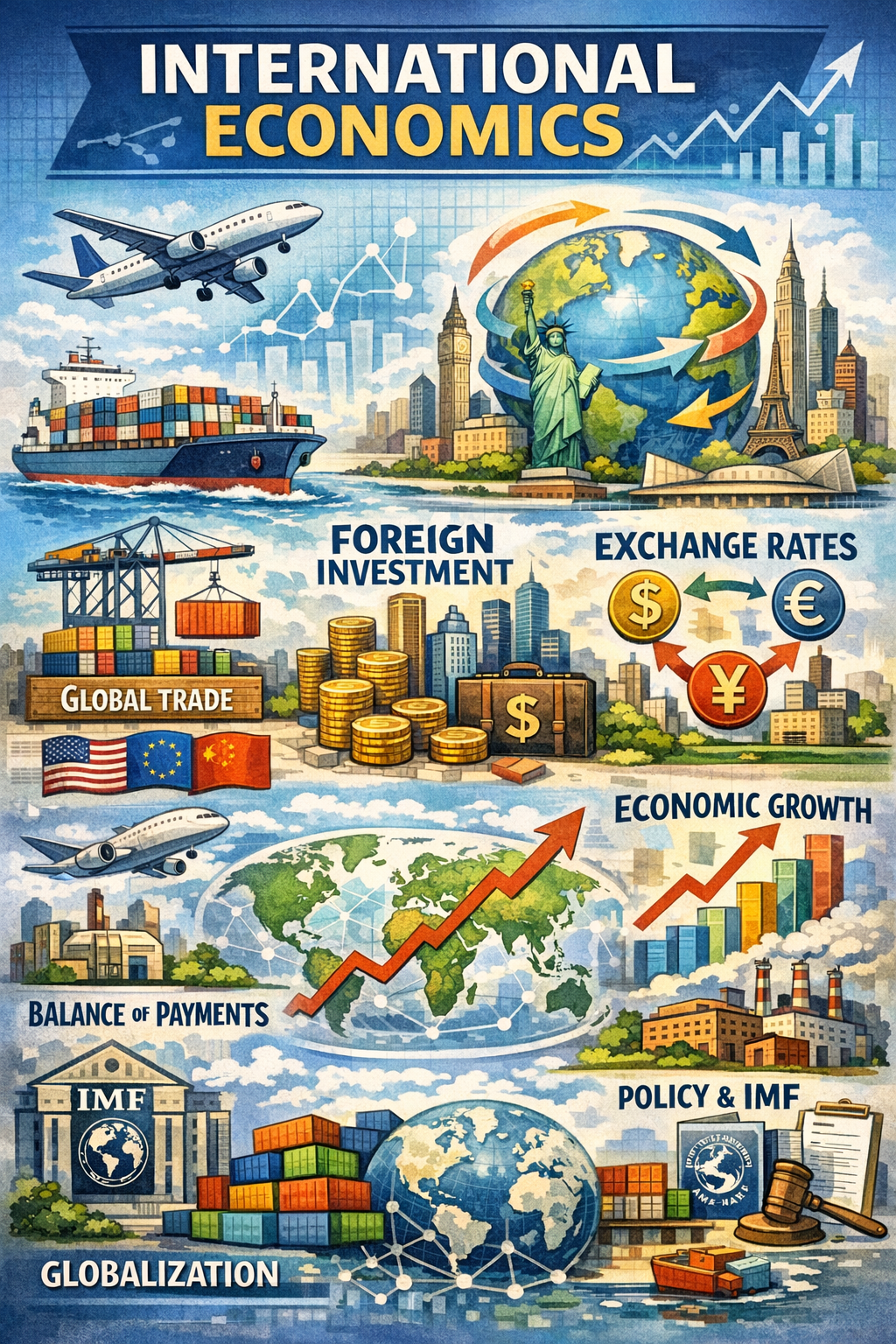
The general objective of this course is to enable students to understand the content of international economics and the economic relations between countries, as well as between countries and various international organizations and institutions, and their effects on the national economy.
The skills targeted in this course include the ability to analyze economic relations and benefits between countries, understand their content, interpret the impact of their variables on national economic variables, and determine how to benefit from comparative advantages and from economic, monetary, and financial institutions in support of the national economy.
- Teacher: fatimazahra BAKDI
- Teacher: Mounia KHELFAOUI