Climatic accidents
This course is intended for third-year students in Agricultural Sciences, specializing in Plant Protection, as well as for anyone wishing to become familiar with climatic accidents.
Course content :
1. General Overview of Climatic Accidents
2. Major Factors Responsible for Climatic Accidents
3. Secondary Factors (Climatic Accidents)
4. Overview of Climate Hazards
5. Assessment of the Consequences of Climate Hazards in the Agricultural Sector
6. Climate Risk Management Strategy (Practical Management)
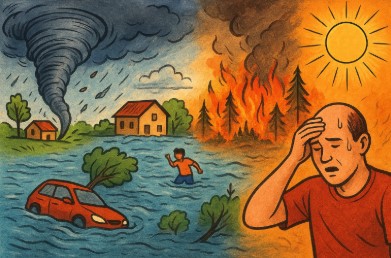
Climatic accidents are extreme weather events such as droughts, floods, storms, or heatwaves. Their frequency and intensity are increasing due to climate change, causing severe impacts on the environment, agriculture, and populations.
The “Climatic Accidents” course aims to provide students with a solid understanding of extreme climatic phenomena that affect agriculture and the environment. It introduces the main types of climatic accidents—such as droughts, frosts, floods, storms, and heatwaves—and explains the meteorological and climatic mechanisms responsible for their occurrence. Through this foundation, students will learn to recognize and interpret the signs and causes of these events within different climatic contexts.
The course also focuses on analyzing the impacts of climatic accidents on agricultural systems. Particular attention is given to the effects on crops, soils, livestock, and biodiversity. Students will develop skills to assess the extent of damages and to identify the factors that influence agricultural vulnerability. Case studies will be used to understand how climatic events shape rural livelihoods and influence food security.
Finally, the course encourages students to explore adaptation and prevention strategies to mitigate the consequences of climatic risks. It highlights agronomic and technical solutions, such as crop diversification, water management, and protective structures, as well as policy approaches that promote sustainable and resilient agricultural practices. Emphasis is also placed on understanding the link between the growing frequency of climatic accidents and global climate change, especially in regions like North Africa and semi-arid zones, to develop context-appropriate solutions.
Learning Outcomes
The main competency targeted by this course is the ability to:
Develop basic knowledge about climatic accidents.
Analyze the effects of climatic accidents on cultivated plants and their adaptive behaviors.
This course is intended for third-year students in Agricultural Sciences, specializing in Plant Protection, as well as for anyone wishing to become familiar with climatic accidents.
Course content :
1. General Overview of Climatic Accidents
2. Major Factors Responsible for Climatic Accidents
3. Secondary Factors (Climatic Accidents)
4. Overview of Climate Hazards
5. Assessment of the Consequences of Climate Hazards in the Agricultural Sector
6. Climate Risk Management Strategy (Practical Management)
Climatic accidents are extreme weather events such as droughts, floods, storms, or heatwaves. Their frequency and intensity are increasing due to climate change, causing severe impacts on the environment, agriculture, and populations.
The “Climatic Accidents” course aims to provide students with a solid understanding of extreme climatic phenomena that affect agriculture and the environment. It introduces the main types of climatic accidents—such as droughts, frosts, floods, storms, and heatwaves—and explains the meteorological and climatic mechanisms responsible for their occurrence. Through this foundation, students will learn to recognize and interpret the signs and causes of these events within different climatic contexts.
The course also focuses on analyzing the impacts of climatic accidents on agricultural systems. Particular attention is given to the effects on crops, soils, livestock, and biodiversity. Students will develop skills to assess the extent of damages and to identify the factors that influence agricultural vulnerability. Case studies will be used to understand how climatic events shape rural livelihoods and influence food security.
Finally, the course encourages students to explore adaptation and prevention strategies to mitigate the consequences of climatic risks. It highlights agronomic and technical solutions, such as crop diversification, water management, and protective structures, as well as policy approaches that promote sustainable and resilient agricultural practices. Emphasis is also placed on understanding the link between the growing frequency of climatic accidents and global climate change, especially in regions like North Africa and semi-arid zones, to develop context-appropriate solutions.
Learning Outcomes
The main competency targeted by this course is the ability to:
Develop basic knowledge about climatic accidents.
Analyze the effects of climatic accidents on cultivated plants and their adaptive behaviors.
- معلم: Fethia HALFAOUI
- معلم: Zakia KACI
Pest Bio-ecology
- معلم: Nadir BABA AISSA